How to avoid fashion greenwashing penalties with clear claims
A sustainability claim is only as defensible as the evidence behind it. For fashion businesses asking how to avoid greenwashing penalties, the answer is to make claims specific, clearly qualified and supported by records that substantiate the product and the supply-chain activity described. In the United States, Section 5 of the FTC Act prohibits unfair or deceptive practices; the FTC Green Guides offer guidance, not a standalone law with a fixed fine schedule.
Greenwashing risk often lies between marketing language and evidence held across suppliers. A claim about recycled fibre, reduced water use or ethical production is difficult to defend when its scope is vague, its comparison basis is unclear, or its records cannot be traced to the product and production stage. Transparency makes a claim’s boundaries visible, but it does not replace proof.
This article explains how to substantiate environmental claims, improve supply-chain transparency and document due diligence, then outlines the different forms penalties and enforcement can take. The focus is practical: define the claim, assemble relevant evidence, and ensure public wording does not go beyond what the evidence shows.
Key Takeaways
- Keep claims about a specific product line separate from claims about the whole brand, and make the scope clear in the wording.
- Build a traceable evidence trail across suppliers, factories and production stages so each claim can be connected to the product it describes.
- Use precise, quantified language for material or impact claims, with a clear comparison basis and supporting records.
- Understand how enforcement, settlements and legal challenges can arise from claims that overstate what the evidence supports.
- Use professional evidence retrieval and due diligence support when supplier records or social-accounting documentation are incomplete.
Table of Contents
- How Can a Professional Help Fashion Brands Avoid Greenwashing?
- 2. Transparency in sourcing, factories, and supply chains
- 3. Using specific, quantified sustainability language
- 4. Examples of fashion-brand greenwashing penalties
- Professional Documentation and Due Diligence for Fashion Businesses
- Symolem: Green Claims Verification
How Can a Professional Help Fashion Brands Avoid Greenwashing?
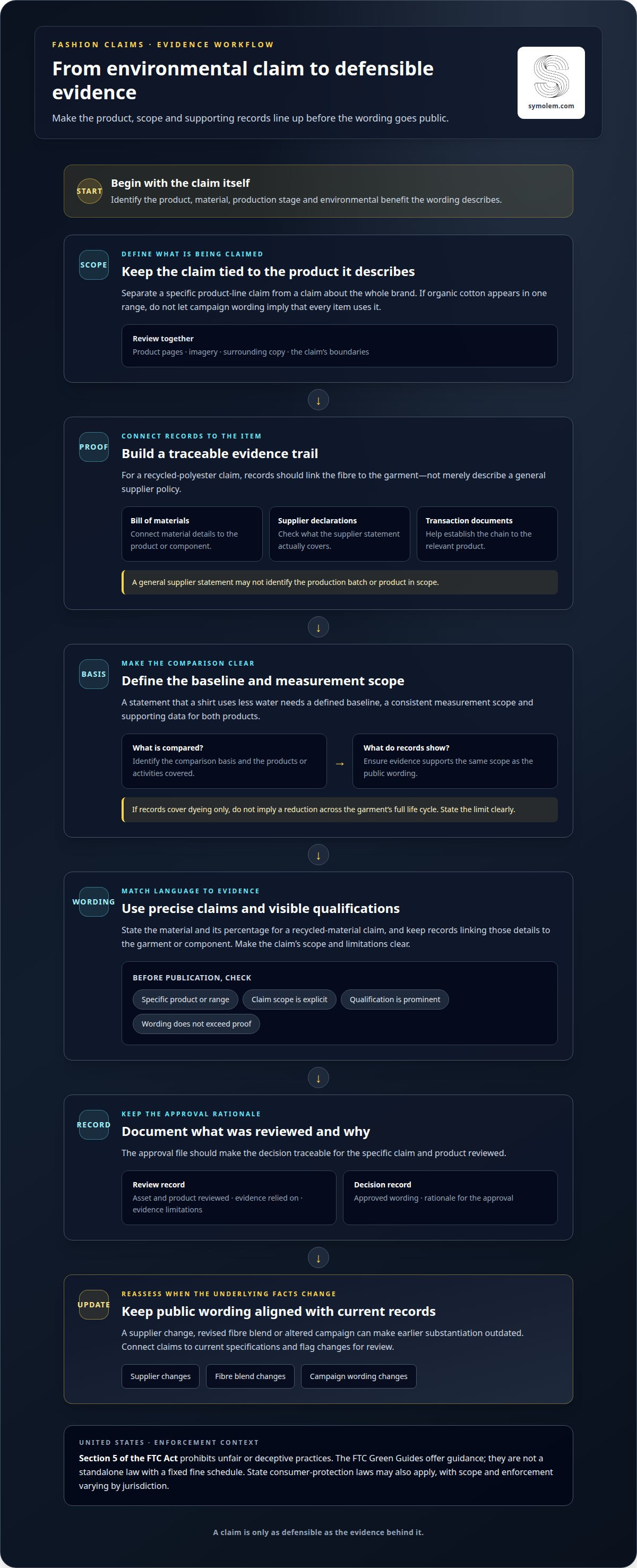
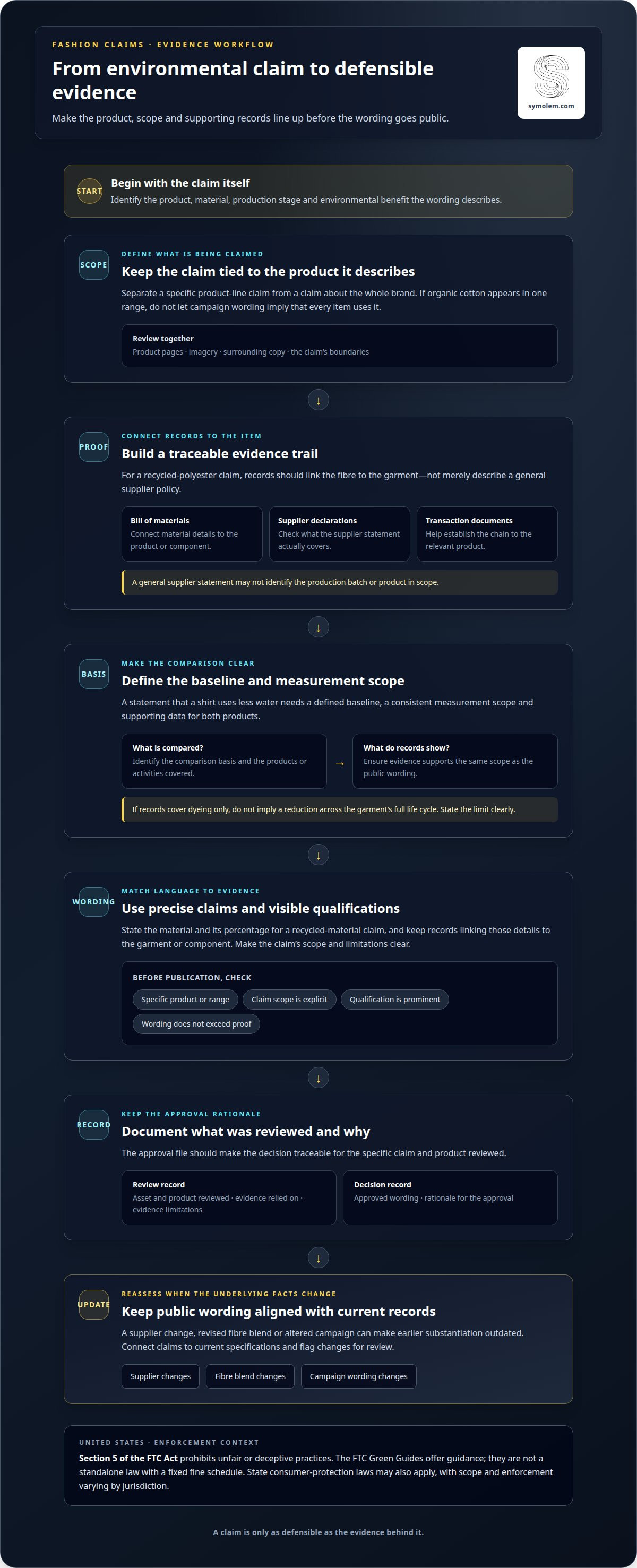
A sound review starts with the claim and the product it describes. Identify the material, production stage and environmental benefit, then check that records support each part. For example, a recycled-polyester claim needs documentation linking that fibre to the garment, not just a general corporate policy.
Keep the scope explicit. If organic cotton appears in one range, a campaign should not imply that every item uses it. Review product pages, imagery and surrounding copy together, then narrow wording that suggests a brand-wide benefit. This is a practical way to avoid greenwashing penalties in fashion markets where your claims appear.
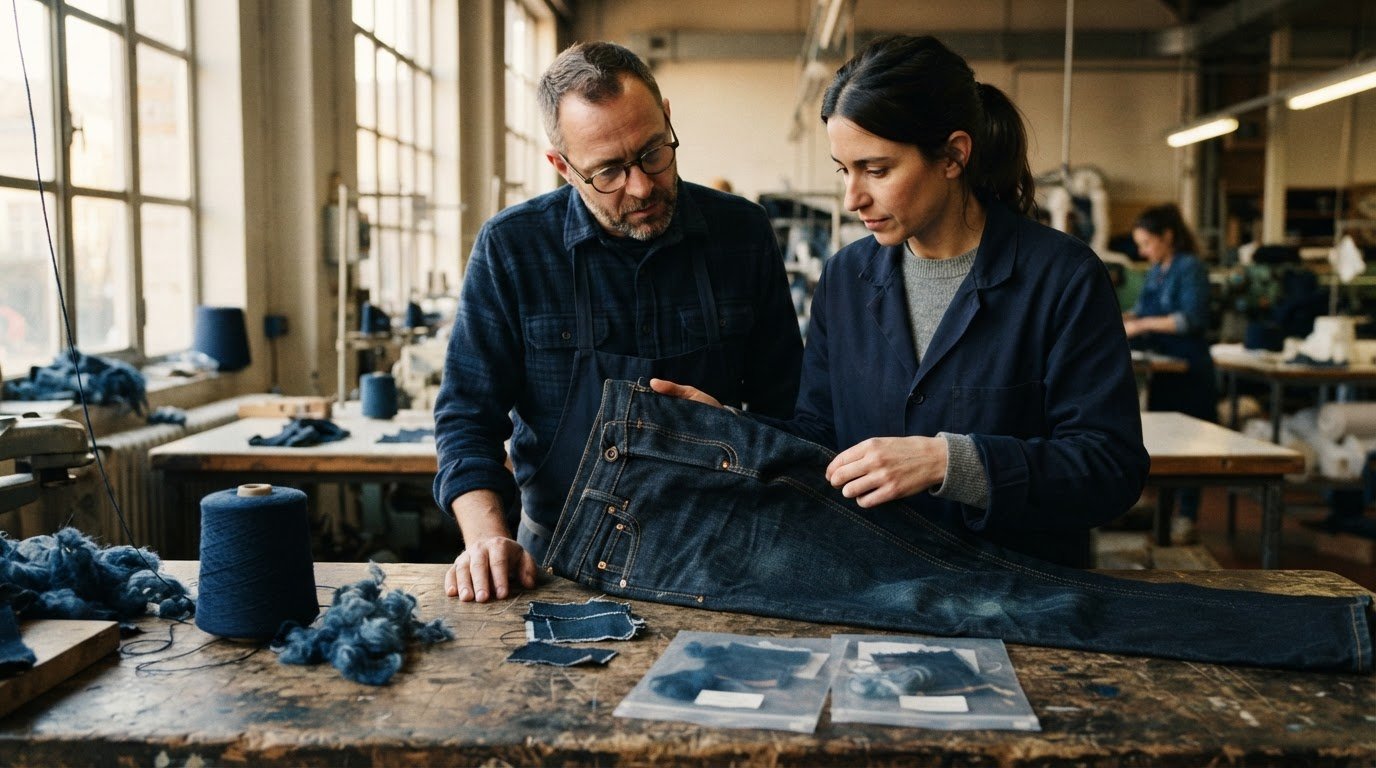
Substantiate recycled-material claims at product level. State the material and its percentage, and keep records linking those details to the garment or component. A bill of materials, supplier declarations and transaction documents can help establish the chain. A general supplier statement may not identify the relevant production batch or product.
Consumer research can show how audiences interpret a claim, but it cannot prove the claim is true. Test phrases such as “responsibly made” against product details and audience responses to identify where consumers might infer broader environmental or ethical benefits than the evidence supports. Use those findings to refine the wording, not as a substitute for substantiation.
Comparative claims need a clear basis. Saying a shirt uses less water requires a defined baseline, a consistent measurement scope and supporting data for both products. If records cover only dyeing, do not imply a reduction across the garment’s full life cycle. State the limit clearly and make the qualification prominent.
In the United States, Section 5 of the FTC Act prohibits unfair or deceptive practices. The FTC Green Guides help assess environmental marketing claims, but they are guidance, not a standalone law with a fixed fine schedule. State consumer-protection laws may also apply, with scope and enforcement varying by jurisdiction.
Before publication, compare every claim with its evidence, check that qualifications are clear, and record the approval rationale. The file should identify the asset and product reviewed, the evidence relied on, its limitations and the approved wording. This gives teams a practical basis for deciding whether a claim is sufficiently supported.
Approval does not stay accurate automatically. A supplier change, revised fibre blend or altered campaign can make earlier substantiation outdated. Connect claims to current specifications and flag changes for reassessment so public wording continues to match the product and records in scope.
2. Transparency in sourcing, factories, and supply chains
Transparency starts with knowing which entities perform each production activity. A supplier list naming only the final factory may omit fibre processing, dyeing, finishing or subcontracting. For each garment, sourcing records should distinguish the contracting supplier from the facility that performed the work. This helps brands describe supply relationships accurately and identify where information needs follow-up.
Explain what a factory disclosure covers. Does it list current production sites, approved suppliers or facilities used for a particular order? These categories are not interchangeable. A public list can name facilities and their roles, while internal records link each site to orders and products. Without that context, consumers may infer more visibility than the disclosure provides.
Subcontracting creates another potential gap. An order placed with one manufacturer may involve work at another facility, such as embroidery or washing. Record which supplier authorised the work, where it took place and which order it affected. If that activity is outside the brand’s mapped supply chain, public statements about factory coverage should make the boundary clear.
Climate claims need a distinct boundary. Separate reductions within the value chain from compensation through carbon credits. For example, credits purchased by a company should not be described as a reduction at a fabric mill. Identify the activity covered and explain whether reported progress comes from operational changes or compensation.
Comparisons over time also require consistent coverage. Changes in factory participation or sourcing volume can affect what emissions figures represent across reporting periods. Document which facilities and activities are included in each period, then clarify whether the comparison reflects like-for-like operations or a changed boundary.
Link public disclosures to controlled internal records. Sourcing teams can maintain facility identities, production roles, order references and dates, then notify communications teams of changes before claims are updated. If a supplier moves production, review factory statements and climate wording connected to that production route.
Consumers researching fashion brands can look for facility roles, sourcing scope and explanations of climate progress. A named factory alone does not establish environmental performance, and a carbon-credit statement does not demonstrate an operational reduction. A useful disclosure describes a defined activity and makes its limits understandable.
For global fashion businesses, transparency is an operating discipline, not simply a webpage. About 3% of clothing purchased in the United States is produced domestically today, making clear sourcing information relevant to international supply networks. A consistent record of facilities, activities and claim boundaries gives buying teams a firmer basis for decisions and reduces the risk that public statements outpace actual operations.
3. Using specific, quantified sustainability language
Quantification is useful only when the number has a defined meaning. A statement such as “30% lower impact” leaves key questions unanswered: lower than what, measured where, and across which production activities? A professional review tests the calculation boundary, comparison method and product scope, then ensures the marketing language does not imply a broader result than the analysis supports.
Interpret material labels carefully. “Organic cotton” identifies a material characteristic, but it does not establish every environmental benefit consumers might associate with the finished garment. Separate the verifiable attribute from wider implications about water, land use or manufacturing. Describe the supported characteristic rather than turning one material choice into an unlimited sustainability claim.
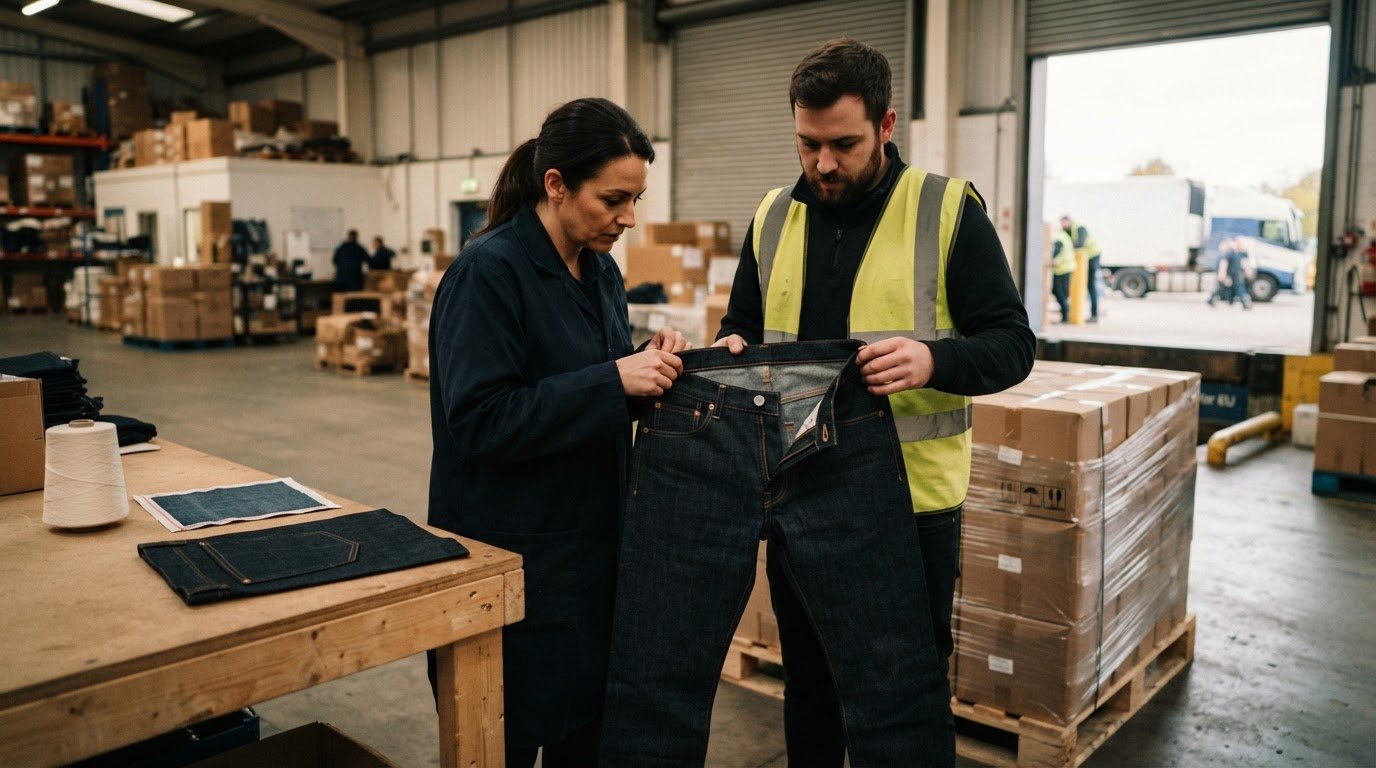
Certifications differ in purpose and scope. Some assess a product or material; others evaluate a company, facility or process. Match the certificate’s covered entity, product category and validity period to the exact marketing statement. A certification on a sustainability page should not imply that unrelated garments or every supply-chain stage fall within its assessment.
That distinction matters across digital and printed communications. A logo on a product page, hangtag or campaign can create an impression beyond its explanatory text. Review the full presentation, including headings and nearby imagery, and check whether consumers can understand what the certification does and does not cover. A link to detailed terms cannot fix an unclear main claim.
Make commitments precise, too. A target should identify the activity or materials covered, the intended outcome and the delivery period. Distinguish future commitments from achieved results, then check progress language against available records. If a goal covers selected products, do not present it as a completed transformation across the business.
Materials marketed as sustainable need context, not just a flattering adjective. Organic cotton, recycled fibres and other inputs can have different attributes and trade-offs across cultivation, processing and garment manufacture. Check whether the claim names the relevant attribute and whether the supporting analysis covers the stated stage. A material choice alone is not evidence about the whole product.
Rules vary by market. U.S. environmental advertising claims are assessed under federal and state consumer-protection regimes, while the EU has its own requirements, including EmpCo. Fashion brands selling in both markets should review wording for each jurisdiction rather than assume one approved phrase works everywhere. Keep the claim, evidence and presentation aligned in scope.
A robust approval record links the final wording to its calculation, certification or other supporting evidence. It also identifies covered products and limitations, allowing teams to revise the claim when specifications or targets change. Specific language makes the basis of a claim testable and narrows the gap between marketing and documented performance.
4. Examples of fashion-brand greenwashing penalties
Enforcement can take different forms. H&M reached a $3 million settlement in the United States over claims about its Conscious Collection. That example shows why product-level sustainability language requires evidence that matches the garment, rather than broad brand messaging.
Scrutiny does not always end in a penalty. In 2022, EU regulators reportedly found 96% of H&M’s sustainability claims unsubstantiated or misleading. The Netherlands Authority for Consumers and Markets also found multinational fashion brands had made false green claims. These findings illustrate how regulators can challenge practices before or without a reported fine.
Allegations must not be confused with regulatory findings. An Allbirds class action alleged misleading claims about products’ environmental footprints and sustainable, responsible manufacturing. Plaintiffs challenging Canada Goose statements questioned ethical and sustainable sourcing, including the use of real fur and practices involving affiliates.
Italy fined Shein €1 million in 2025 over greenwashing. The case shows that global fashion brands can face scrutiny in different markets, while the legal basis and outcome depend on the jurisdiction and conduct examined. A company’s claim must therefore be assessed against the rules applying where it is marketed.
Why do fashion brands make claims that later attract scrutiny? Competitive pressure can reward concise, compelling messages, while textile sourcing evidence is spread across materials, suppliers and production stages. When marketing moves faster than documentation, a brand may describe an aspiration as an achievement or apply a limited improvement to a wider product range.
Consumers researching fashion brands can distinguish reported facts from allegations and brand statements. Check whether a claim identifies the product, material or production activity, and whether the supporting certification matches that scope. A company-wide credential, for example, does not automatically establish a specific garment’s environmental performance.
The same distinction should guide internal review. A settlement, regulatory finding and lawsuit raise different evidential issues; a complaint does not itself establish that every allegation is true. Preserve the claim wording, product records, supplier evidence and review decisions relevant to each matter so responses address the specific issue rather than relying on general sustainability statements.
These cases point to one consistent control: link each public claim to evidence for the product and activity it describes. H&M’s reported claims, the Allbirds allegations and Italy’s Shein fine differ in status and outcome. Treating them as equivalent would obscure the central lesson: precise wording and auditable substantiation matter across the global textile trade.
Consumer-protection scrutiny can challenge claims that lack evidence matching the garment, and enforcement may result in a settlement or other regulatory action. The legal basis and outcome depend on the jurisdiction and conduct examined.
Professional Documentation and Due Diligence for Fashion Businesses
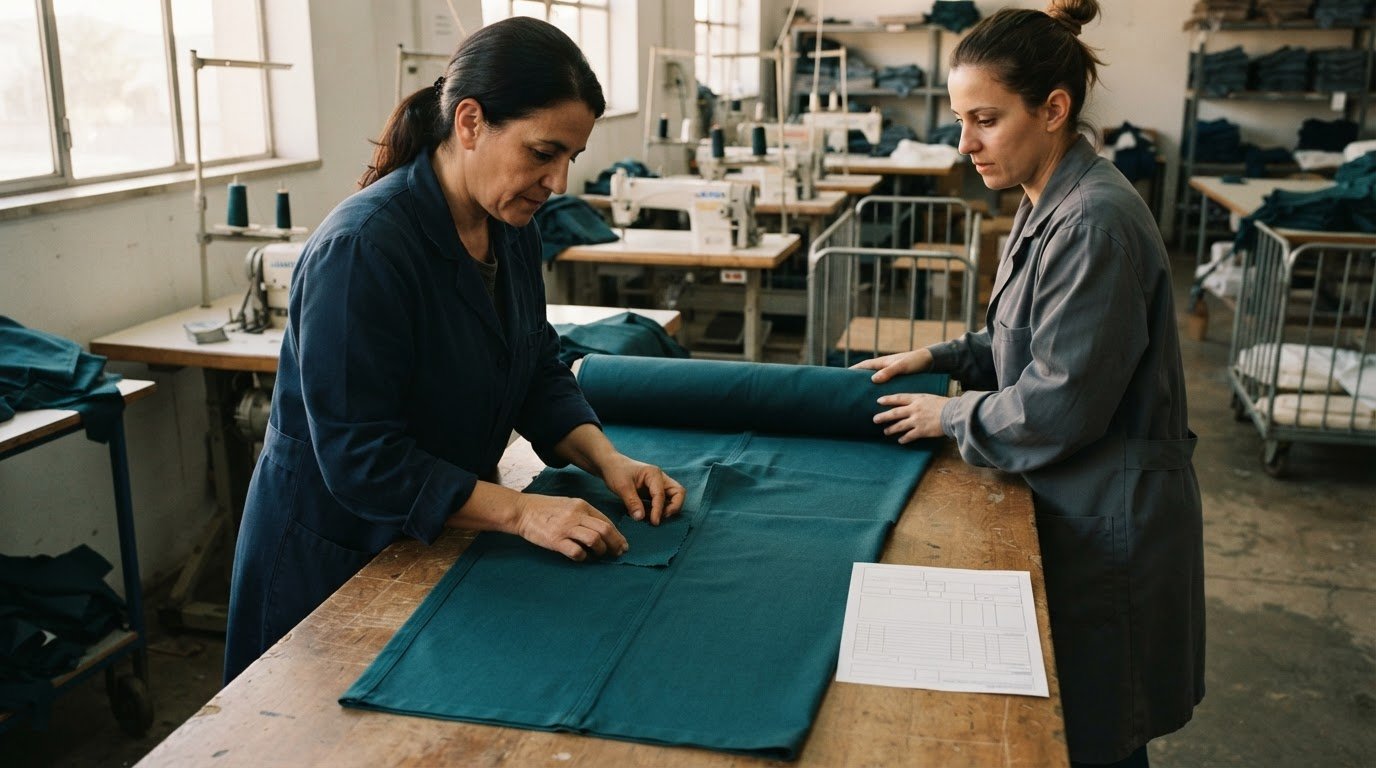
A claim needs an evidence file, not a folder of unrelated supplier documents. For a cotton shirt, connect its product specification to fibre-origin records, mill documentation and manufacturing details. Each record should identify the product or production batch it supports. This lets reviewers trace an environmental statement back to the actual supply chain.
Start by defining the claim’s boundary. If the wording describes reduced environmental impact during dyeing, the evidence should relate to that process, not imply reductions across farming, spinning, transport and garment assembly. A dyeing house in Turkey may hold process records, while a spinning mill in India holds separate fibre and yarn information.
Next, organise evidence against each element of the claim. A bill of materials can identify fibres and components; supplier declarations can explain their origin; transaction certificates can support specific material flows. Check that product names, batches, dates and quantities align across records. Resolve any mismatch between a certificate and the garment it is meant to support before publication.
Due diligence also means recording gaps and follow-up actions. If a supplier has not provided a relevant test report, note what is missing, who was asked for it and what decision followed. This record distinguishes a genuine corrective action from an unsupported claim that a problem has already been resolved.
Social claims need their own substantiation. Link claims about fair wages or worker welfare to auditable records covering the workers, facility and period described. For example, an audit relating to a CMT factory in Portugal cannot automatically substantiate conditions at another manufacturing site. The evidence must match the stated scope.
Control document versions. Record the approved claim, the evidence reviewed, its limitations and the version of the marketing asset. If a supplier changes or a fabric composition is revised, the responsible team can identify which claims need reassessment. This prevents an outdated product file from supporting new wording after manufacturing has changed.
Keep an auditable decision trail. For each claim, document its owner, supporting records, review date, qualification and approval status. If a retailer challenges a statement, the business can retrieve the relevant evidence instead of reconstructing its rationale from email threads. Strong documentation does not make an inaccurate claim genuine; it exposes the gap between language and practice.
For a structured review of claim evidence and its limits, request professional green claims verification before the next marketing release.
Symolem: Green Claims Verification
Symolem provides Green Claims Verification for fashion businesses that need claims assessed against the evidence supporting them. The review can help identify where wording exceeds the documented product or supply-chain scope, and where missing supplier records affect substantiation. When evidence is difficult to retrieve across Tier 1-3 suppliers, regulations data retrieval can support the work; social accounting and due diligence address worker welfare and human rights evidence.
For retailers and marketplaces, Symolem-ID screens third-party brand ranges before purchase orders are signed. For fashion brands, professional review can help bring marketing claims and product records into closer alignment.
Screen third-party brand compliance before signing the PO. Explore Symolem-ID or run a free product scan.
For claim substantiation or supplier evidence support, contact Symolem.
Make the Next Claim Evidence-Led
Make evidence governance part of product approval, not a last-minute communications check. For teams deciding how to avoid greenwashing penalties in fashion, the practical priority is to connect claim approval with sourcing, product records and supplier follow-up before wording reaches customers.
Symolem can review fashion claims through Green Claims Verification, retrieve missing Tier 1-3 supplier records, and assemble auditable evidence on worker welfare and human rights due diligence. Retailers and marketplaces can use Symolem-ID to screen third-party brand ranges before purchase orders are signed. The appropriate route depends on whether the evidence gap concerns a specific claim, supplier documentation or a retail range.
Screen third-party brand compliance before signing the PO. Explore Symolem-ID or run a free product scan.
Need to retrieve missing Tier 1-3 supplier evidence or substantiate social accounting for retail stockists? Take the 5-minute Free Assessment or contact Symolem about advisory support.
Clear claims begin with evidence that stands up to scrutiny. Make that standard part of your next product and campaign decision.
Frequently Asked Questions
What is “Greenwashing”?
Greenwashing is presenting a product or business as more environmentally responsible than its evidence supports. In fashion, this can mean describing a garment as “eco-friendly” without clarifying the specific benefit, or suggesting one improved product represents an entire brand. The central issue is the impression consumers receive, not simply whether a sustainability term appears. Claims should be assessed alongside their qualifications, imagery and product context.
The paradox of big brands: true sustainability or greenwashing?
A brand’s scale does not establish either genuine progress or greenwashing. It may make measurable improvements in one product range while facing unresolved impacts elsewhere. Assess each statement within its scope: a fibre commitment, factory programme and corporate target describe different things. Size, reputation and a polished sustainability page cannot replace evidence linking an achievement to the products and activities covered.
What are examples of “greenwashing” in the fashion industry?
Examples include calling a whole garment “recycled” when the claim applies only to one component, or using “ethical” without explaining the relevant production practice. A brand might also present an emissions reduction at one factory as a company-wide result. These examples describe potential misleading impressions, not findings about a particular business. Ask what consumers could infer and whether records substantiate that specific impression.
What can be done about greenwashing in the textile industry?
Fashion businesses can create a review process linking each environmental claim to the relevant product, supplier evidence and production stage. For example, sourcing teams can send fibre-origin documents and manufacturing records to the person approving the associated product claim. Marketing teams should receive the approved wording and its limits. Retailers can also screen evidence before purchase orders, helping identify missing support before products enter a range.
What U.S. laws prohibit greenwashing in fashion advertising?
Section 5 of the Federal Trade Commission Act prohibits unfair or deceptive acts or practices in the United States. The FTC uses it to evaluate misleading environmental marketing claims, including fashion advertising. State consumer-protection laws may also apply, but their provisions and enforcement vary by state. Businesses selling across state lines should assess the claim and its presentation in the markets where consumers encounter it.
What FTC Green Guides rules apply to sustainability claims on clothing and textiles?
The FTC Green Guides offer guidance for evaluating environmental marketing claims; they are not a standalone law with a fixed fine schedule. For clothing, broad terms such as “eco-friendly” need clear qualification and substantiation. A recycled-content statement should identify the material and its percentage. A comparative claim, such as using less water, needs a defined basis and evidence supporting the stated comparison.
What penalties can fashion brands face for false environmental claims in the United States?
Consequences depend on the claim, applicable law and enforcement outcome. The FTC may take enforcement action when environmental marketing conflicts with the Green Guides, which help assess claims under Section 5. The Guides themselves do not set a fixed fine schedule. H&M reached a $3 million settlement in the United States over Conscious Collection claims, but that settlement does not establish a universal penalty for fashion businesses.
Frequently Asked Questions
Talk to a consultant
Have a question about how this applies to your brand?
Ask Lavinia Fernandes directly. Tell us your products and markets and you get a straight answer on what applies and what to do first.