可持续合规如今决定时尚行业的市场准入。
EPR、ESPR 与数字产品护照正逐个市场落地。我们帮助品牌与零售商建立满足要求的产品数据。
Our Digital Product Passport code was accepted by the EU registry on the day it opened — 20 July 2026.


Inaugural conference · Free to attend
What do your clothes really cost?
Product compliance is a decision about a product, not a report about a company.
Sustainability for fashion is product compliance. It means knowing what each garment is made of, where it comes from, and what you can prove.
What product compliance intelligence is
A garment is either legal to sell in a market or it is not. That turns on what it is made of, where it came from, what is printed on the label and the product page, and what you can prove when someone asks. The decision attaches to the SKU, and it is made again for every market the product enters.
What product compliance intelligence is not
It is not ESG reporting, which describes the company. It is not a factory audit, which describes the site. Both feed it. Neither answers whether this dress can be listed in Germany next season.
What compliance intelligence means
The three things that decide it are held together and kept current: the rules in each market, the evidence you hold, and the product record they attach to. The output is a status per product, per market — cleared, action needed or blocked — and the file behind it.
Product Relationship Management
The easiest way to think of it: Product · Regulations · Markets. For every product you sell, we connect what it is, what the law demands, and where you sell it — so nothing you put in front of a customer is left unproven.
Product
Every SKU, feed, claim and care label
Regulations
ESPR, EmpCo, UFLPA, packaging EPR
Markets
UK, EU, US and everywhere you sell
Pre-PO screening with Symolem-ID
Check hundreds of SKUs against 50+ regulations in seconds, before you sign the PO or clear customs. See blocked lines, unproven claims and missing test certificates before stock is made or shipped.
Evidence retrieval across Tier 1–3
Software portals stall in fashion because spinning mills and dye houses do not log into client dashboards. Our specialists chase and verify lab tests, transaction certificates and fibre origins directly from source factories.
Audit-ready human-rights due diligence
Worker welfare, wage verification and grievance data compiled into auditable evidence packs that satisfy EU CSDDD, German LkSG and US forced-labour enforcement, not generic policy PDFs.
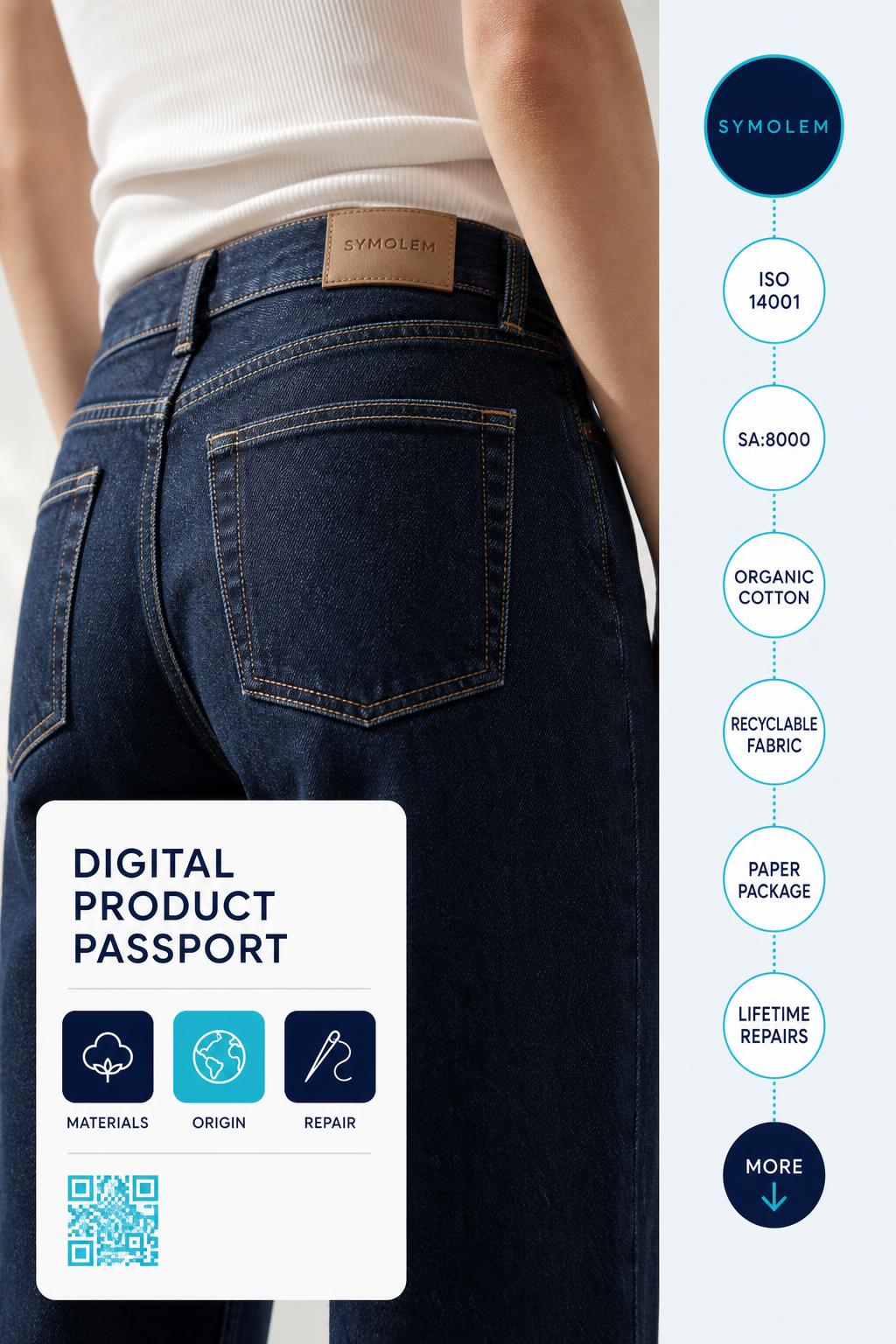
Ecodesign for Sustainable Products Regulation
Every product inspected against 50+ regulations, not just ESPR
Symolem prepares your product data and audits your evidence against global requirements, starting with the EU ESPR. Fibre composition, certificates, named Tier 1 and Tier 2 sites and every green claim, checked and owned before they go anywhere near a purchase order.
- 50+regulations checked
- Secondsper product
- 1Verification ID
Whichever Digital Product Passport provider you choose, the passport is only as good as the data behind it. The ESPR textile delegated act will set which fields must be carried and who is accountable for each one. We make sure your suppliers will be ready to answer for them. Start with our ESPR Digital Product Passport checklist.
What evidence we check
Select a data group to see the kind of entries we inspect and verify against the evidence.
inspection record · Product identity
- GTIN 05012345678900 · GS1 Digital Link
- Model: Wide-leg denim, style DN-402
- Batch 2026-07-WK29 · EU registry identity verified
- Economic operator: brand legal entity and EORI
Market access depends on the product, not just the company.
We track the rules so your product and sourcing teams don't have to.
Great Britain
No ESPR equivalent yet, but the CMA can act directly on misleading environmental claims under the Digital Markets, Competition and Consumers Act.
United States
No federal regime — obligations are set state by state, including California's SB 707 textile EPR, the FTC Green Guides, and Proposition 65 chemical disclosure.
EEA / EFTA
Norway, Iceland and Liechtenstein take EU acts through the EEA Joint Committee on a different timetable; Switzerland is EFTA but not EEA.
Built on the UN/CEFACT UN Transparency Protocol.
Symolem holds a seat on the UN/CEFACT working group developing the UN Transparency Protocol (UNTP), the open standard for verifiable product and sustainability data, and contributed to its public review.
ESPR 服务
从敞口走向准备度。
分四个阶段。
每一次合作都始于评估。发现差距后,四阶段的 Symolem 项目——一个结构化的 13 周工作安排——将其逐步弥合。每一阶段都建立在前一阶段之上,把您的业务从监管不确定性推向经过验证、站得住脚的合规状态。
ESPR 是锚点——所有向欧盟销售的时尚企业都必须首先为其做好准备。但它并非孤立到来。我们跟踪 14 个司法辖区内的 50 项时尚与纺织法规——PFAS 禁令、EPR 制度、绿色声明执法、强迫劳动规则、废弃物出口管制——让客户看到整盘棋,而不仅仅是其中最大的一枚棋子。
ESPR 差距分析与合规路线图
我们将您品牌当前的状况与 ESPR 义务进行对照测绘,识别风险最高的差距,并构建一份优先级明确、直至 2028 年设有清晰里程碑的合规路线图。
数字产品护照准备度
我们评估您的数据基础设施,将您的产品与 UNTP 护照架构及欧盟 DPP 注册系统已接受的样本进行比较,识别供应链数据缺口,并明确您的品牌所需的技术架构。
供应链透明度与 ESPR 数据
多层级供应商梳理、循环性审计与产品级范围 3 计算,为您在 ESPR 法规 2024/1781 下的 DPP 构建所需的证据基础。我们同时会分析您正在合作的 DPP 服务商,依据欧盟法律核验其输出——因为无法被独立核查的合规,根本算不上合规。
监管影响衡量 HIE®
我们运用自有的 Human Impact Equivalence Framework®,把您的 ESPR 合规数据转化为结构化、可审计的影响证据,并按监管机构、投资者与机构对手方所要求的标准进行量化——不超出法律要求,也恰好达到其所要求的水准。
评估依据结构化的百分制方法进行打分,专为一致性与可比性而设计。
Where it goes wrong
Four ESPR questions a buyer, a marketer or an auditor will ask before you are ready.
The pre-PO compliance firewall for fashion retailers
Under EU ESPR, EmpCo and the UK DMCC, retailers share liability for the third-party brands they list. Symolem-ID screens a brand's line sheet in seconds and gives buying and legal teams a status per SKU before intake: cleared, blocked or missing evidence, with the gap named.
Tier 1–3 evidence retrieval and audit-ready social accounting
Stockists and customs are asking for proof you do not have on file. We chase your suppliers for the missing lab tests and transaction certificates, and tie every green claim to its evidence, so wholesale orders are not delayed and claims hold up under EmpCo and the UK DMCC.
We have traceability data. Why isn't it a passport?
Tier maps and audit PDFs are not a Digital Product Passport and do not tell you whether a silk blend clears AGEC, PPWR or the textile delegated act. We take the outputs you already hold, map them to the passport fields and the rules, and audit the record, then hand one Verification ID to whichever DPP provider you choose, with the proof pack.
An ESPR finding came back red. What now?
A red flag with no remediation path is a stock dropout, a withdrawn claim or a blocked listing. We investigate the supplier data gap, run the social accounting and corrective action plan with the supplier, and upload the verified resolution back into the platform that raised it.
Plain English
The ESPR and EmpCo questions we get asked most
Short answers, no jargon. If yours is not here, ask us directly and we will answer it the same way.