
Manage ESPR Compliance Costs for Small Fashion Brands
The ESPR compliance cost for small fashion brands is not a single fixed figure. It depends on which requirements apply to products sold in the EU, what supplier evidence is already available and how much work is needed to organise missing product information. The ESPR sets the framework; product-specific delegated acts will define the detailed requirements for textiles.
That uncertainty makes budgeting difficult, but delaying preparation can leave brands chasing supplier records when requirements take effect. A Digital Product Passport (DPP) is a digital product record, so readiness depends on the quality and traceability of its underlying data, not just the technology used to display it.
This article explains which ESPR and DPP obligations may apply to small fashion brands, what supply-chain records to organise, and how to assess the work driving compliance costs. It also examines how supplier evidence gaps, product data and timing shape a practical preparation plan, with the textile delegated act expected in 2027.
Key Takeaways
- Plan compliance spending around the evidence your products require and the supplier records you still need to retrieve, rather than assuming one fixed cost applies to every brand.
- Map which products and business entities place goods on the EU market; company size can affect specific ESPR duties.
- Organise product and supplier records, including fibre-origin documents, chemical test reports, transaction certificates and packaging information.
- Keep the Digital Product Passport in view, but distinguish preparation of reliable product data from the passport technology used to present it.
- Use a structured gap assessment to prioritise missing evidence and coordinate requests across your supply chain.
Table of Contents
- What's the minimum supply-chain documentation I need by January 2027?
- ESPR obligations and scope for fashion brands
- Company-size exemptions and applicability dates
- Compliance preparation for small fashion brands
- What is the EU Ecodesign for Sustainable Products Regulation (ESPR) and when do requirements apply to fashion brands?
- Symolem-ID for pre-purchase compliance screening
What's the minimum supply-chain documentation I need by January 2027?
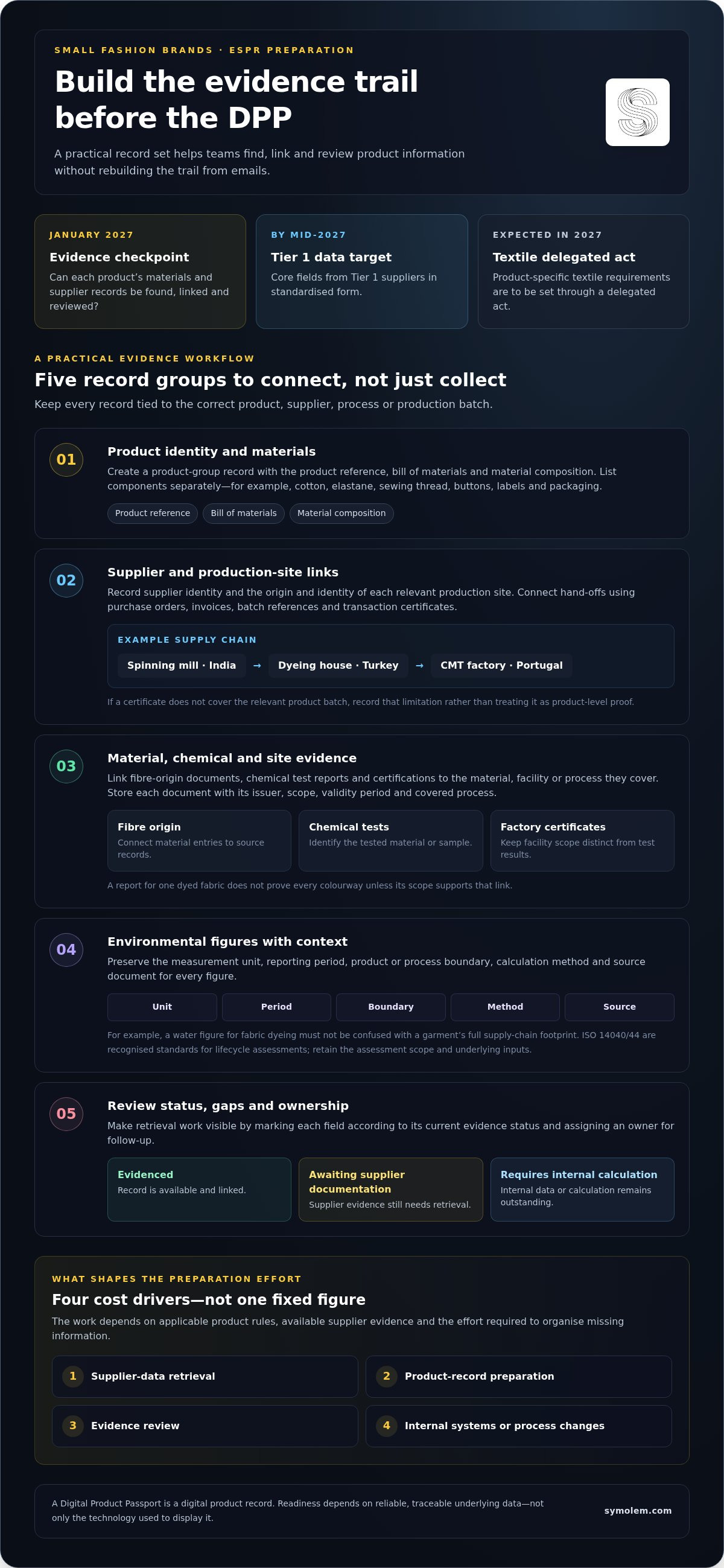
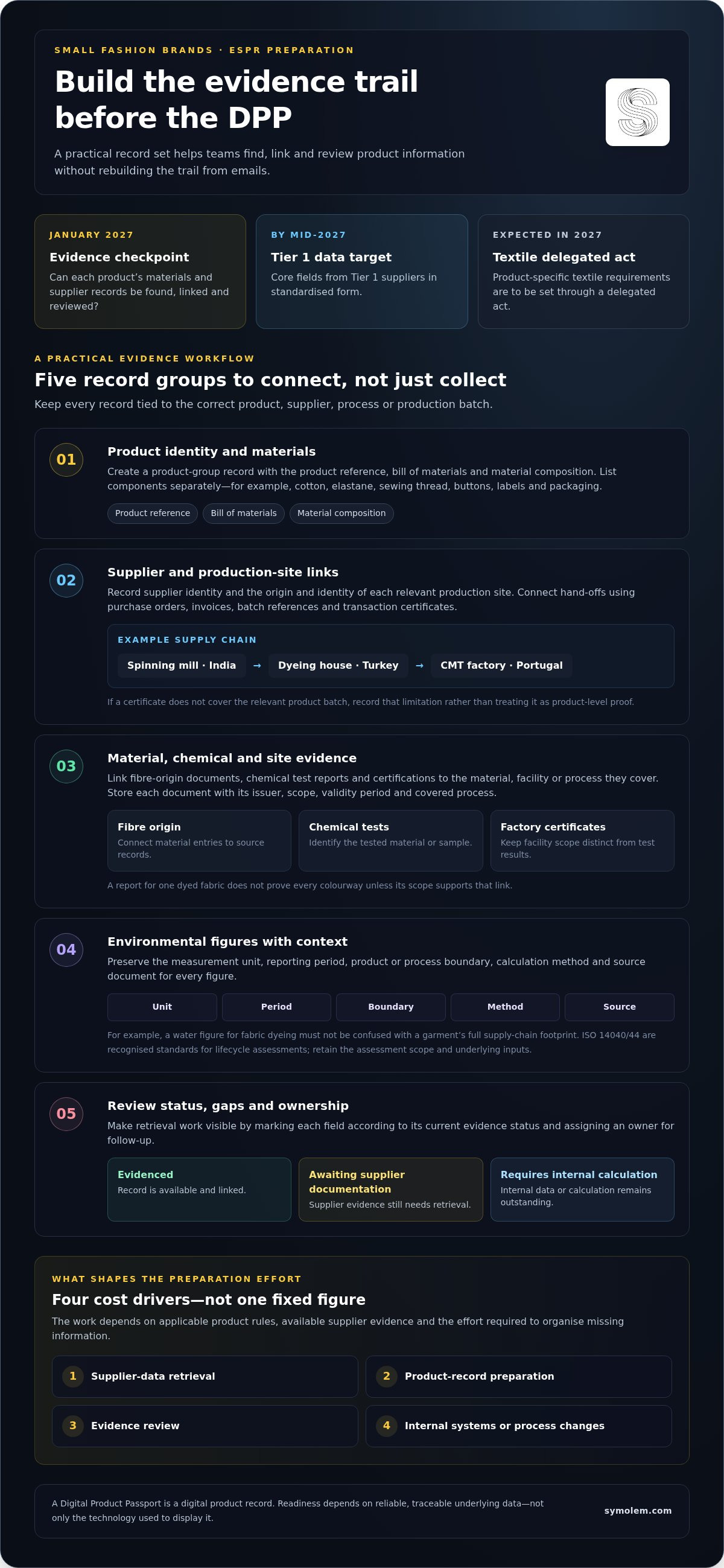
Start with a usable evidence set, not a finished Digital Product Passport. The textile requirements will be set through a product-specific delegated act, expected in 2027. A practical January 2027 checkpoint is whether each product’s materials and supplier records can be found, linked and reviewed without rebuilding the evidence trail from emails.
Build a data requirements catalogue for each product group. The preparation target is for Tier 1 suppliers to provide core fields in standardised form by mid-2027. Record the product reference, supplier identity, material composition, evidence type, document date and source. For a cotton shirt, that means linking the bill of materials to fibre-origin evidence and the relevant spinning, dyeing and garment-making suppliers.
Gather material and environmental evidence
Begin with the bill of materials and trace each component to its source. A product record might identify cotton, elastane, sewing thread, buttons, labels and packaging separately. Ask the Tier 1 supplier to connect each material entry to upstream records, such as a spinning mill’s fibre documentation or a dyeing house’s chemical test report. Keep the evidence attached to the correct style and production batch.
Environmental data needs context. For each figure, preserve the measurement unit, reporting period, product or process boundary, calculation method and source document. A water figure for fabric dyeing, for example, must not be confused with a garment’s full supply-chain footprint. ISO 14040/44 are recognised standards for lifecycle assessments; identify whether an assessment follows those standards and retain its scope and underlying inputs.
- Map fibre composition to the bill of materials and supplier evidence.
- Record the origin and identity of each relevant production site.
- File environmental figures with units, period, method and boundary.
- Link test reports and certifications to the product or process they cover.
Traceability depends on links between records, not the volume of documents. A spinning mill in India may supply yarn to a dyeing house in Turkey, which then supplies fabric to a CMT factory in Portugal. Keep purchase orders, invoices, batch references and transaction certificates that connect these hand-offs. If a certificate covers a supplier or material but not the relevant product batch, record that limitation rather than treating it as product-level proof.
Factory certifications and chemical reports serve different purposes. Store each document with its issuer, facility, scope, validity period and covered process. A factory certificate may describe site controls, while a laboratory report concerns a tested material or sample. For example, do not use a report for one dyed fabric as proof for every colourway unless its scope supports that link.
January preparation should expose gaps and assign owners. Mark each field as evidenced, awaiting supplier documentation or requiring internal calculation. This makes retrieval work visible before the 2027 data target, and helps distinguish missing records from missing environmental measurements. A structured evidence register also gives product teams a clear basis for prioritising supplier requests.
ESPR obligations and scope for fashion brands
Small and medium-sized fashion brands placing products on the EU market fall within the ESPR framework, although some duties depend on company size. Product-specific rules will determine textile requirements, including durability and DPP information.
The framework covers products placed on the European market and prioritises textiles, garments and footwear. For a fashion business, the relevant question is whether it places products on that market, not where its headquarters or factories are located. A brand based outside the EU may still need to prepare product information for EU sales.
The ESPR addresses unsold consumer products through a destruction prohibition and disclosure duties. Micro and small enterprises are currently excluded from both duties under Article 25(5), while the prohibition was scheduled to apply to non-SMEs from July 19, 2026. The European Union sets the framework; exemptions may be extended to smaller enterprises by delegated act in specified circumstances.
For covered companies, destroying specified unsold clothing and footwear can breach the prohibition, subject to limited derogations. Member States set ESPR penalty levels under Article 74, which must be effective, proportionate and dissuasive; the applicable consequence depends on national implementation and the breach.
Small-Brand Exemptions
Small-brand exemptions are exclusions from specified ESPR duties, not a blanket exemption from the regulation. Article 25(5) currently excludes micro and small enterprises from the destruction ban and discarded-unsold-products disclosure duty. This distinction matters: a small brand should separate those two duties from product requirements that may apply through textile-specific rules. A delegated act could extend the exclusions in specified circumstances.
Compliance Costs for Small Brands
ESPR compliance costs for a small fashion brand depend on the applicable product rules and the work needed to meet them. Key cost drivers include supplier-data retrieval, product-record preparation, evidence review and changes to internal systems or processes. A brand with accessible bills of materials and substantiated supplier records faces a different workload from one tracing fibre and production details across multiple factories. No single estimate captures those differences.
Digital Product Passport duties are product-specific. The textile delegated act will determine which products require a passport and what information it must contain. Article 9 is identified in the ESPR framework for a digital product record accessible through a QR code or RFID. A brand should distinguish the cost of organising and verifying underlying product data from the technology used to present it.
Enforcement exposure depends on the applicable duty and national penalty framework. Practical risks also include incomplete records, unsupported product information and commercial disruption if a retailer cannot complete its own compliance review. Mapping products, sales markets and company-size status helps identify which obligations need attention first.
Company-size exemptions and applicability dates
ESPR timelines vary by company size and obligation. For small fashion businesses, an exemption from specific duties does not remove the need to track product rules and delegated-act dates.
Exemptions by Company Size
Company-size exemptions exclude certain businesses from particular ESPR duties, rather than from the regulation as a whole. Some smaller businesses may be excluded from certain unsold-product duties, but the scope of any exemption should be checked. This matters because a small brand should distinguish those exclusions from product requirements that may apply to its goods.
The European Union scheduled the prohibition on destroying specified unsold consumer products to apply to non-SMEs from July 19, 2026. The European Commission may extend the exclusions for micro and small enterprises through delegated acts in specified circumstances. Keep company-size records current and map each legal entity to the products it places on the EU market.
Do not treat a size exemption as an exemption from every ESPR obligation. Product-specific ecodesign requirements and DPP rules follow the relevant textile delegated act. A small clothing brand may therefore need to prepare product information even when its size excludes it from unsold-product duties.
When Requirements Apply
Applicability dates determine when a duty becomes mandatory for a product or business category. The textile delegated act is expected in 2027, and its adopted provisions will set the final application date and transition arrangements. The ESPR generally prevents a delegated act from setting an application date earlier than 18 months after it enters into force, except in duly justified cases.
That timeline affects budgeting. A brand can map product lines and supplier responsibilities before the textile rules apply, then align implementation with the final requirements. Products placed on the EU market before the delegated act’s application date are exempt from its requirements. Keep launch dates and market-placement records linked to each product line.
Compliance costs vary with the number of affected products, business size and supply-chain complexity. A brand with consolidated supplier records faces a different evidence workload from one sourcing materials through multiple factories. Cost planning should separate data retrieval, record review, internal process changes and product-specific ecodesign work.
Medium-sized enterprises also have a distinct timeline: the ESPR disclosure duties and destruction prohibition were scheduled to apply to them from July 19, 2030. Track that date separately from the textile delegated act, because the two timelines concern different obligations. A calendar that records company-size status, product scope and market-placement dates helps teams assign work without confusing one deadline with another.
Compliance preparation for small fashion brands
Preparation should turn the Ecodesign for Sustainable Products Regulation into a product-level work plan. Start by identifying EU-bound ranges, the evidence supporting them and the supplier records that need to be collected in a structured way.
Preparation Steps
A preparation sequence establishes ownership before new ecodesign requirements become mandatory. First, map legal entities, EU sales and product groups; then analyse gaps in current product records. For a jacket, connect its material composition, component suppliers and product claims to supporting evidence, rather than storing disconnected files.
Next, assign an owner to each data category and record where the evidence comes from. A materials lead might own fibre composition, while sourcing tracks supplier and facility records. Keep the product reference, source, scope and review status together. This makes it easier to distinguish a missing document from one that exists but covers another material or production batch.
Plan the circular product-data structure around likely information needs, without treating draft assumptions as final requirements. The EU framework includes DPPs, and QR codes or RFID can link products to digital records. For example, a QR code on a garment can provide access to a structured record, while the underlying data remains traceable to its source.
Use readiness work to check that environmental claims are supported by evidence. If a product description refers to recycled fibre, connect the claim to material records and supporting supplier documentation. If the supply chain includes a spinning mill, dyeing house and garment factory, record which organisation supplied each relevant input.
Preparation Timeline
The timeline should follow the European Commission’s product-rule process, not a guessed launch date. Its ESPR Working Plan 2025-2030 identifies textiles as a priority category. The textile delegated act is expected in 2027, and the adopted measure will establish detailed product requirements and application arrangements.
Brands have approximately 1-2 years to prepare before new ESPR design requirements are implemented. Use that period to map products, identify data owners and close high-impact evidence gaps. Then compare the final delegated act with the existing data structure, so changes can be isolated instead of triggering a full records rebuild.
Sequence preparation according to dependencies. Product teams can identify EU-bound styles first; sourcing can then map suppliers and request records; compliance staff can assess whether the evidence supports each product-level data point. A cotton T-shirt made with separate fabric and sewing suppliers shows why teams need a shared reference connecting those records.
Review the plan whenever product ranges or suppliers change. A new fibre blend, factory or packaging component can alter the evidence needed for a product record. Keep an issue log showing the affected style, responsible team, missing input and next action. This helps management prioritise work and allocate preparation costs to the sources of complexity.
What is the EU Ecodesign for Sustainable Products Regulation (ESPR) and when do requirements apply to fashion brands?
The Ecodesign for Sustainable Products Regulation, Regulation (EU) 2024/1781, establishes a framework for product-specific ecodesign requirements in the EU. Adopted on 13 June 2024, it covers products placed on the EU market and identifies textiles as a priority category in the 2025-2030 Working Plan.
The ESPR does not immediately impose one complete set of textile specifications on every fashion product. Delegated acts set requirements for product groups and may address durability, recyclability, recycled content and product information. For fashion brands, the textile delegated act will determine which products are in scope, what evidence is needed and when the rules apply.
The European Commission’s 2025-2030 Working Plan, adopted on 16 April 2025, confirms textiles as a priority. The textile delegated act is expected in 2027, with Q4 2027 identified as an indicative adoption period. The final measure will establish its application date and transition provisions, so a forecast date should not be treated as a binding compliance deadline.
The general framework already includes duties distinct from future textile product requirements. ESPR addresses destruction of specified unsold consumer products and requires in-scope companies to disclose information about discarded unsold products. The prohibition was scheduled to apply to non-SMEs from July 19, 2026. Company size and the particular duty therefore matter alongside the future product rules.
Digital Product Passports form another part of the product-specific system. The EU DPP Registry became operational on 20 July 2026, while registration phases in by product category as delegated acts take effect. The passport requirements for textiles will define the required data; an EU-accepted passport sample carried 67 data points, while a UNTP-conformant passport carries up to 236.
For a brand selling a jacket in the EU, the practical sequence is to identify the relevant product group, follow its delegated act, then map each required data point to a record and supplier. A product placed on the EU market before the textile act’s application date is exempt from that act’s requirements. Link market-placement dates to product records, not just seasonal launch calendars.
Use the regulatory timeline to distinguish current duties from future product-specific work. Record which entities place products on the EU market, classify products by group, and assign owners for design, supplier data and passport preparation. This gives finance a sound basis for prioritising spending without treating every ESPR requirement as one immediate project.
Symolem-ID for pre-purchase compliance screening
Symolem-ID screens third-party fashion ranges against 50+ global textile regulations before retailers sign purchase orders. It assigns each product a status: Cleared, Blocked or Missing Evidence, helping buying and compliance teams identify issues before proceeding.
Fashion brands can use an ESPR and DPP Readiness Diagnostic to assess product records against relevant requirements and identify evidence gaps. Where supplier documents are missing, Tier 1-3 Regulations Data Retrieval Advisory supports their retrieval, including chemical test reports, fibre-origin documentation and transaction certificates.
Turn to these services when your team needs a clearer view of evidence gaps across a product range or supplier network. Contact Symolem to discuss your compliance preparation.
Turn compliance planning into an operating decision
The next decision is structural: who owns product evidence, who resolves supplier gaps, and who approves claims before buyers see them. Assigning those responsibilities helps keep compliance work from becoming a last-minute purchasing or production issue. It also gives leaders a clearer basis for assessing ESPR compliance costs for small fashion brands.
Make the next move a focused review of product ownership, supplier records and internal responsibilities. Retailers and fashion brands can take different steps depending on where their compliance workload sits.
Screen third-party brand compliance before signing the PO. Explore Symolem-ID or run a free product scan.
Need to retrieve missing Tier 1-3 supplier evidence or substantiate social accounting for retail stockists? Take the 5-minute Free Assessment or Book an Advisory Consultation.
Frequently Asked Questions
What are ESPR and DPP?
The ESPR is the European Union’s Ecodesign for Sustainable Products Regulation, and a DPP is a digital product record. The regulation establishes a framework for requirements set by product category. For a fashion product, its passport may connect product information to a digital record accessible through a QR code or RFID. The textile rules will determine which products need passports and what information they must contain. A passport is a data record, not simply a QR code.
How Do You Prepare for Compliance Now?
Begin by mapping products sold into the EU to their materials, suppliers and evidence owners. For example, connect a garment’s bill of materials to supplier records supporting its fibre composition and production details. Separate information already linked to a product from missing documents or records covering a different product. Then assign responsibility for retrieving, reviewing and maintaining each record as product ranges and suppliers change.
Is my small brand also affected?
A small brand can be affected if it places fashion products on the EU market, even if its headquarters and factories are elsewhere. Company size changes some obligations; it does not create a general exemption from the ESPR. For example, micro and small enterprises are currently excluded from the unsold-product destruction ban and disclosure duty, but should still assess product-specific requirements as they emerge.
Is the ESPR already in force in 2026?
Yes. Regulation (EU) 2024/1781 entered into force in July 2024, establishing the framework for product-specific ecodesign rules. That does not mean every textile requirement applies at once. The obligations for fashion products depend on the relevant delegated act and its application provisions. Brands should distinguish framework duties already applying to covered businesses from textile requirements that depend on later product-category measures.
Which Fashion Products Are Affected?
Textiles, garments and footwear are priority product categories under the ESPR framework. The textile delegated act will determine which specific products are covered and the requirements for each. Classify products by type and intended EU market rather than assuming every item faces identical rules. For instance, a shoe and a knitted top may require different product information once their category requirements apply.
Who Does ESPR Apply To in the Fashion Industry?
The ESPR can apply to businesses placing products on the EU market, including brands based outside the European Union. A fashion label’s location alone does not determine whether it is in scope. Map the legal entity responsible for each EU-bound product and its role in placing that product on the market. Retailers and marketplaces should also consider their own responsibilities when selling third-party apparel.
How will the ESPR Digital Product Passport affect fashion brands, and what data must it contain?
A DPP will provide a digital record for covered products, with product-category rules determining the required data. Relevant information may concern product origin, materials, environmental impacts, and repair or recycling instructions. For a garment, connect each required field to a reliable record and its source. The textile delegated act will define the applicable passport requirements, so prepare traceable product data rather than assuming one fixed template.
What product testing, traceability, and supplier documentation will fashion brands need for ESPR compliance?
The exact testing and documentation requirements depend on the applicable textile product rules. Useful records to organise include bills of materials, fibre-origin documents, chemical test reports, transaction certificates, and supplier or facility details. Link each record to the relevant product, material or process. For example, do not treat a laboratory report for one fabric as evidence for other fabrics unless its scope supports that use.
Screen third-party brand compliance before signing the PO. Explore Symolem-ID or run a free product scan.
Need to retrieve missing Tier 1-3 supplier evidence or substantiate social accounting for retail stockists? Take the 5-minute Free Assessment or Book an Advisory Consultation.
Frequently Asked Questions
Talk to a consultant
Have a question about how this applies to your brand?
Ask Lavinia Fernandes directly. Tell us your products and markets and you get a straight answer on what applies and what to do first.